

Dupe or Infringement? Where the Law Smells Trouble
Are fragrance dupes legal? What houses, dupe sellers, shops, decanters, influencers and platforms may and may not do in the US, EU and UK.
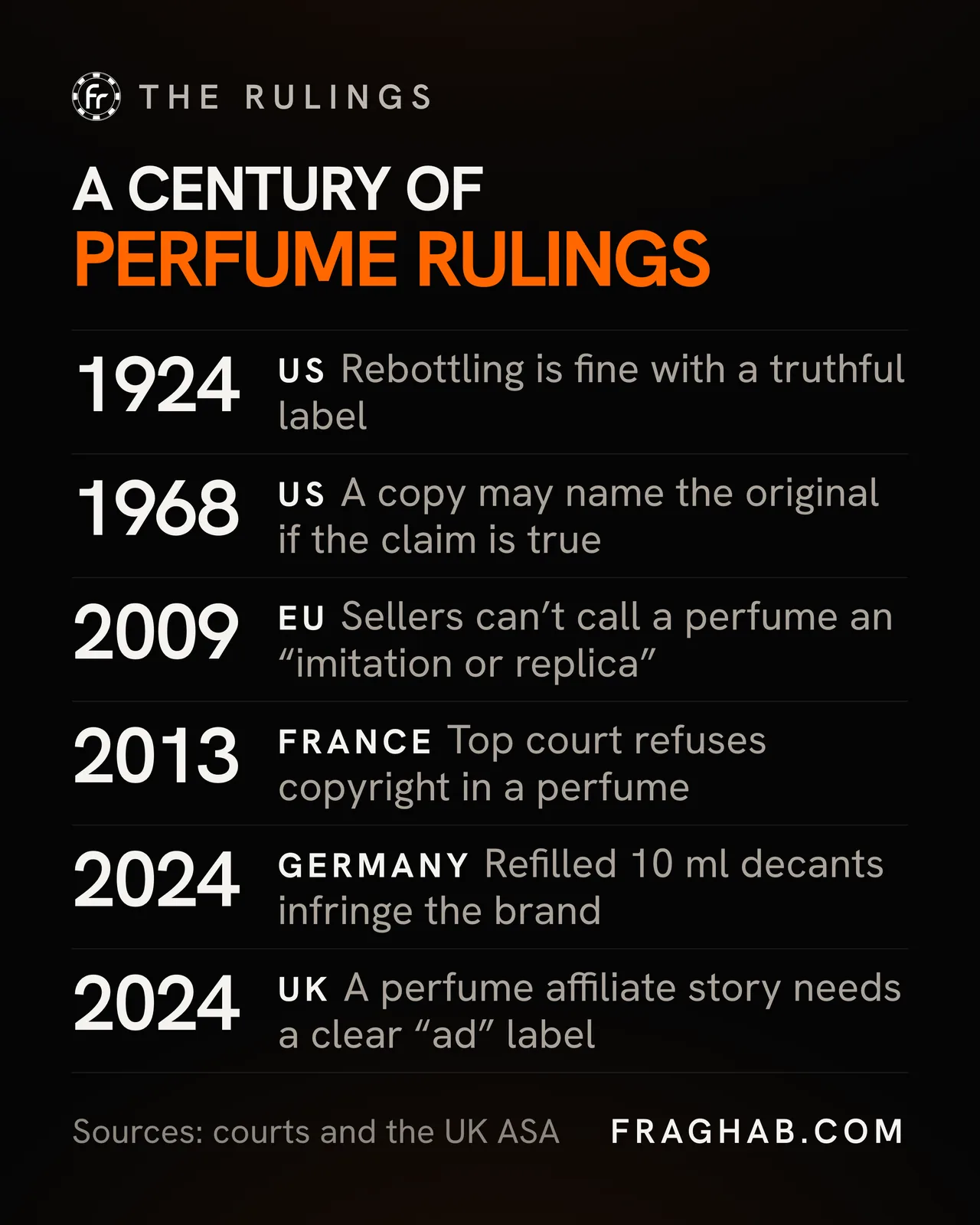
You’ve seen this video. Two bottles go up in front of the camera, one around $400 and the other around $35. Somebody sprays both, thinks about it for a second, and tells you the cheap one is close enough that only a fool would pay for the other. There’s usually a link. The format is a lot older than TikTok. “We dare you to try to detect any difference between Chanel #5 (25.00) and Ta’Ron’s 2nd Chance. $7.00.” That line comes from the sales material in Smith v. Chanel, decided by a US federal appeals court in 1968.
Whether that video is legal has never had a single answer. It depends on who made it, who paid for it and where it’s seen. The question got loud in October, when TikTok suspended Noel Deyzel’s fragrance account at 1.8 million followers and Instagram suspended the matching account at 1.2 million. oe24 reports that a report from Nobilis Group, the Wiesbaden company that distributes about 80 brands in Germany, including Creed, Xerjoff, Lacoste and Elizabeth Arden, preceded the TikTok suspension and that the decision lay with TikTok. Deyzel appealed and got access back. Nobilis CEO Udo Heuser calls “smells like” comparisons “verbotene Werbung,” prohibited advertising, and writes that courts have banned them “in höchster Instanz,” at the highest level.
Whether he’s right depends on which link in the chain you mean.
So this is a map of the rules at each level, from the house that made the original to the person holding a bottle up to a camera, in the three places most of this content is made and watched: the United States, the European Union, with Germany as its most litigated example, and Britain. When I say someone lost or broke a rule, a court or a regulator said so. Seller pages are described as they read on November 1. None of this is legal advice, and a lawyer in your country is the only person who can tell you where you stand.
The Four Kinds of Law Involved
Trademark law protects names, logos and, as trade dress, the look of a bottle or a box. It doesn’t protect a smell. That’s why a dupe can copy a scent but can’t put the word Aventus on its own label.
Comparative advertising law decides when one product may be compared with another. The EU directive permits comparisons that meet eight conditions, and one of them is that the ad “does not present goods or services as imitations or replicas of goods or services bearing a protected trade mark or trade name.” Germany wrote that clause into its unfair competition act, the UWG, as section 6, which calls presenting a product “als Imitation oder Nachahmung” of a branded one unfair. It’s the clause behind most of the European dupe cases below. American law has no equivalent clause. Its line is the Lanham Act’s ban on advertising that “misrepresents the nature, characteristics, qualities” of goods, which is a test of truth rather than of imitation.
Copyright and trade secret law would protect the formula itself, if they reached it. Mostly they don’t, as the next section shows.
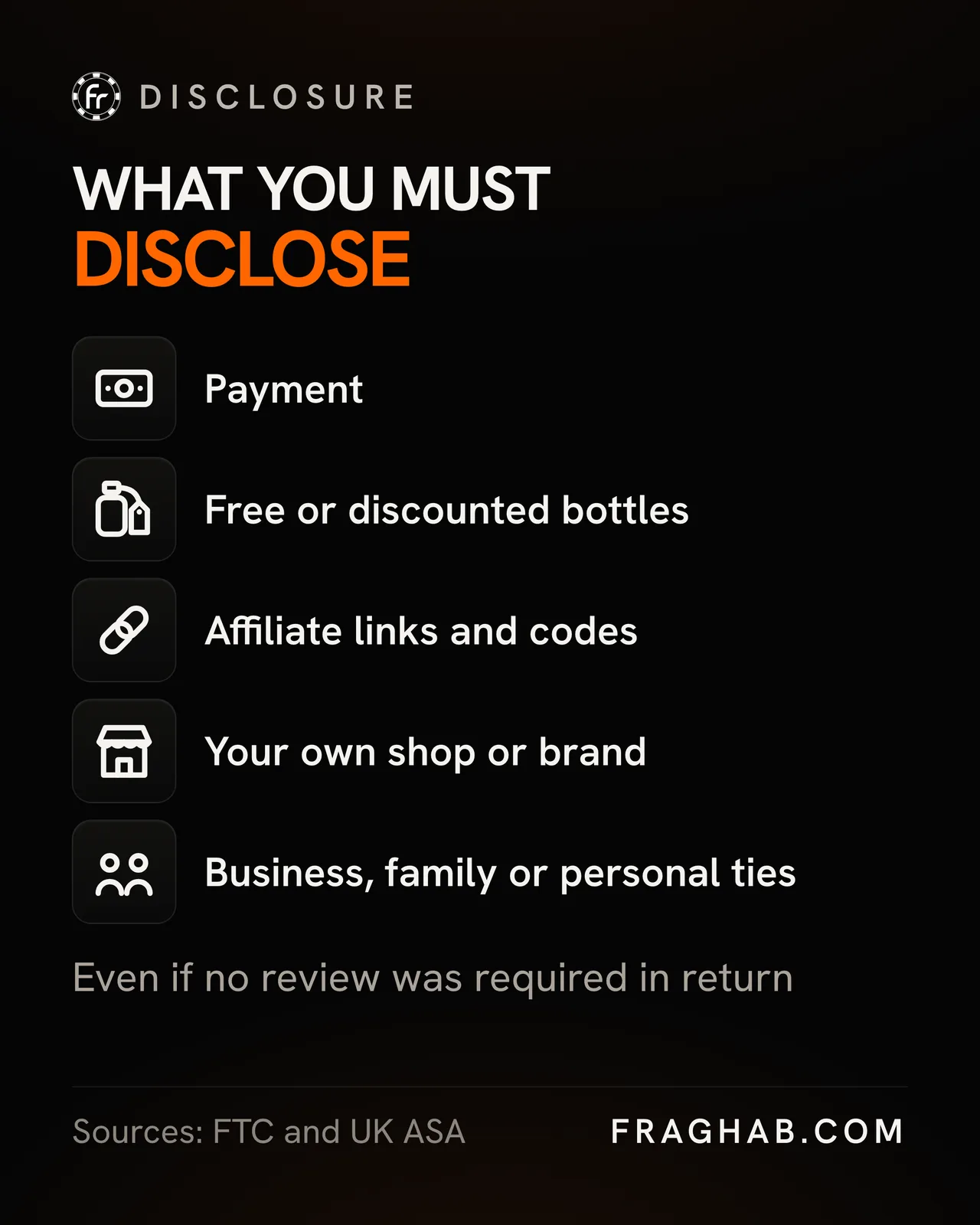
Disclosure law decides when a post is an ad. The FTC’s Endorsement Guides require a material connection to be disclosed “clearly and conspicuously,” and count money and “free or discounted products” as connections “regardless of whether the advertiser requires an endorsement in return.” Britain’s ASA requires ads to be obviously identifiable as ads, and Germany’s UWG requires a commercial purpose to be identified unless it’s plain from the circumstances. Platform rules sit on top of all four, and they can be stricter than any of them.
The Original Houses
What’s allowed
Houses can protect what they actually own, which is names, bottles and packaging, and they can go to court over it. The landmark win is L’Oréal v Bellure. In 2009, the EU’s top court dealt with lists pairing cheap imitations with Trésor, Miracle, Anaïs-Anaïs and Noa, and held that an advertiser can’t present its product as an “imitation or replica” of a trademarked one, confusion or no confusion. Britain’s Court of Appeal had to follow, and Lord Justice Jacob wrote, “with regret,” that the defendants were “indeed muzzled.”
What isn’t
They mostly can’t own the smell. France’s top court has refused perfume copyright more than once, including Lancôme’s claim over Trésor in 2013. The Netherlands is the outlier, where Lancôme won on copyright against Kecofa while losing on trademark, but I couldn’t find a country where copying a smell is plainly illegal across the board. Houses also lose when they stretch. In a US mascara case, Benefit lost to e.l.f. after the court found it hadn’t shown the mascara, “while a ‘dupe’ of Roller Lash, actually dupes any consumers.” Sol de Janeiro’s trade dress claim against MCoBeauty was dismissed without prejudice in September for failing to show the packaging was non-functional, though the judge found other elements adequately pleaded, and it refiled on October 20. In June, in an urgent first-instance ruling, a perfume maker failed in Berlin to hold Google liable for AI Overviews that pointed searchers toward dupes.
A house’s own paid influencer work has to be labeled like anyone else’s, and the designer side often does this properly. Eau d’ Erica’s Armani Short and Elijah Yeroushalmi’s BOSS Short both carry YouTube’s paid label. I found no fragrance house sanctioned over its own influencer campaigns, which doesn’t prove there isn’t one.
The Distributors
What’s allowed
A distributor can enforce rights it’s been authorized to enforce, and it can help keep a luxury brand off the wrong shelf. In Coty v Parfümerie Akzente, the EU’s top court said in 2017 that a luxury supplier can bar its authorized retailers from selling on third-party platforms like Amazon. A Nobilis warning letter, summarized by a German law firm, says it’s authorized to assert marks including Creed, Aventus and Francis Kurkdjian, and by its own count it has run more than 130 court cases, including a 2024 Düsseldorf injunction against the dupe seller Loris. Its win against the German seller Éclat is the textbook route: a claim, a judge and a result. A distributor can also report content to a platform, and Heuser writes that Nobilis reports what it considers legal violations to TikTok and Instagram.
What isn’t
A distributor can’t act on rights it hasn’t been given, and German law lets the target of an unjustified warning recover defense costs and bars abusive enforcement. I found no fragrance decision applying either to anyone, Nobilis included. Whether reporting reviewers’ videos to a platform is legitimate enforcement or a shortcut around a judge is still open, and I found no ruling on it. The nearest is a 2025 Nuremberg decision that an unjustified counterfeit complaint to Amazon was an unlawful interference supporting damages, which helps a target only if the report was wrong. I also found no reported lawsuit by Nobilis against a creator, though Handelsblatt’s paywalled headline says “klagt gegen Influencer,” so I can’t rule one out.
The Inspired-By Houses
What’s allowed
Copying a smell and selling it under your own name and your own look is generally fine. Working out the formula isn’t trade secret theft by itself either: US federal law excludes reverse engineering from improper means, and the EU’s directive allows testing a product you lawfully hold and aren’t otherwise bound on. German sellers won in Cologne in 2008 because their names were too inconspicuous to amount to a clear imitation claim, and Germany’s Federal Court of Justice said in 2011 that merely evoking an original isn’t enough without a clear imitation claim, though it sent that case back rather than ending it. American courts go further and let you name the original. The court in the Chanel case wrote that “imitation is the life blood of competition,” so long as you don’t misrepresent anything or confuse anyone.
What isn’t
The American limit is truth and confusion. Back at trial, the Chanel seller lost because Second Chance wasn’t actually an exact duplicate of No. 5. “If you like OPIUM, you’ll love OMNI” lost in 1987, in part because its disclaimer sat in smaller print than the two names. Excell lost in New York in 2017 over similar names and nearly identical packaging, its “Our Version Of” and “Not Associated With” legends didn’t save it, and it was ordered to account for profits. In Germany, a Berlin court indicated in a 2009 notice that it read “inspired by” as meaning modeled on the original, and Éclat lost over comparisons in the reviews on its own shop, which became final when the Federal Court of Justice refused to hear an appeal in 2025.
Saying nothing yourself isn’t immunity. The FTC says an advertiser “may be liable for a deceptive endorsement even when the endorser is not liable,” German injunctions reach a business for what its agents do, and Britain’s ASA typically treats a brand as “at least jointly responsible” for affiliates’ content, whether or not it knew. Using the real mark on your own goods is counterfeiting, a different world with US statutory damages of up to $2 million per mark per type of goods if it’s willful. And an inspired-by perfume is still a cosmetic: US makers generally register facilities with the FDA, and the EU requires a designated responsible person and portal notification.
How sellers word it
Live product pages show the two legal strategies side by side. American storefronts tend to name the original. Dossier’s US site lists Woody Sandalwood as “Inspired by Le Labo’s Santal 33.” ALT. Fragrances names originals and adds a disclaimer saying it “competes with the designer brand” and isn’t associated with it, the kind of language American judges have looked for, though Excell shows a disclaimer can fail. Oakcha titles one page “Amouage Decision Dupe,” and Alexandria Fragrances has “Inspired by Amouage Decision 42 Man.” In our keyword scan of their catalogues, “inspired by” appeared on about half of Dossier’s products, two-thirds of Alexandria’s and three-quarters of ALT.’s and Oakcha’s.
The German approach is to say nothing. After its loss, Éclat’s German store sells numbers like “ÉCLAT 920 - Citrus Cardamom,” and “inspired by” appears nowhere in its catalogue. Some houses sold mainly in America do the same: we found no named house on Afnan’s or French Avenue’s product pages, and only three of 500 on Armaf’s US store, all in one line.
Retailers and Marketplaces
What’s allowed
A shop can sell these perfumes under neutral names. Dossier’s Amazon listing reads “Dossier - Floral Lavender,” with no original mentioned. Germany’s Federal Court of Justice has held that sellers generally don’t answer for Amazon reviews they didn’t adopt, and a Berlin court accepted “products in the same scent family” as a fair description.
What isn’t
The same Berlin court ruled in 2015 that a shop search returning the dupe when you typed the brand name was anti-competitive. In 2024 it attributed customer reviews to a large drugstore’s online shop, because the shop ran a prize draw for them, showed the stars under the product name, sorted the “most helpful” ones and didn’t filter. In other words, reviews you use as a sales tool become your advertising. Fake reviews are out everywhere covered here: the FTC’s consumer review rule bans them, and Britain’s 2024 consumer law bans fake reviews and reviews that hide an incentive. In Britain, the ASA held Lookfantastic and The Fragrance Shop responsible for an influencer’s unlabeled affiliate story even though both told it they had no direct relationship with her. Genuine bottles have rules too: in 2023, a Düsseldorf court let Coty stop Aldi Süd selling Calvin Klein perfumes beside bargain tables.
Decanters and Resellers
What’s allowed
In America, rebottling genuine perfume goes back to Prestonettes v. Coty in 1924, where the Supreme Court let a company resell Coty perfume in smaller bottles with a truthful label, writing that a mark used without deceiving the public can be used “to tell the truth.”
What isn’t
Germany is much stricter. In 2024, the Berlin court held that selling perfume in refilled 10 ml atomizers infringed the marks even assuming the juice was genuine, and held the seller’s managing director personally liable. Selling decants under a brand’s name in Germany is a trademark question first, whatever you think of the juice.
Publishers and Media
What’s allowed
Reporting on dupes is generally fine, and so is opinion, though links change things in Germany. The Berlin court in the Google case found its AI summaries weren’t Google’s own commercial message, and that any benefit to dupe sellers was a mere reflex, in a dispute where Google wasn’t a perfume competitor. Germany’s top court said in 2021 that an unpaid post favoring another business only counts as commercial if it’s excessively promotional, and that a link to the maker’s website regularly is. A later change to the law says a post for another business has no commercial purpose without payment or a similar benefit, while presuming there was one unless the creator can credibly show otherwise. How that affects the link point, or comparison claims, is unsettled as far as I can find.
What isn’t
In 2023, a Hamburg court ruled against a publisher whose online magazine listed “La Rive perfume dupes” under the names of the originals, each with a “Shop now” button to Amazon. The publisher argued the links didn’t earn a commission, and the court said that was irrelevant.
The Influencers
What’s allowed
Buying a bottle and saying what you think is about as safe as it gets. The FTC says someone with no connection to a brand has nothing to disclose. A federal appeals court made the trademark point in another dispute: “Kremer is not Bosley’s competitor; he is their critic.” In Germany in 2021, Cathy Hummels and Leonie Hanne won their influencer cases because the brands hadn’t paid for the posts at issue. I couldn’t find any German or EU decision applying the comparative advertising rule to an independent, unpaid reviewer. The top-court rulings behind Heuser’s “highest level” line, as far as I found them, involved sellers. The closest any court has come is the Hamburg publisher with “Shop now” links, covered above.
Taking money is allowed too, if you say so. Yeroushalmi’s and Eau d’ Erica’s partnerships carry the paid label. Kai Porten, who runs a niche shop with a private line, marks commercial links with “(Werbung),” the German word for advertising. Patron Profumo says on camera in an Amouage comparison that both bottles were bought and no money was received for the video, and uses TikTok’s “Paid partnership” label on a sponsored review. Cal Cologne opens one Short with “Zaya sent me the brand new fragrance.” Those are the forms disclosure takes in practice: a platform label, a written tag, or a plain statement of how the bottle arrived.
What isn’t
Paid and unlabeled is where people actually get caught. Luisa-Maxime Huss lost at Germany’s top court over a paid raspberry jam post. Closest to fragrance, the ASA ruled against Erim Kaur in 2024 over a “4 long-lasting perfumes for Broke Girlies” story with an affiliate link and no “ad” label, and “Paid links” appearing after the click wasn’t enough. Kaur apologized and removed the links. The same regulator ruled against Grace Beverley over posts for her own brand, and being known as the founder wasn’t enough. The FTC has sent warning letters to named influencers, including ten over Teami tea.
The connections that count are broader than a paycheck. The FTC’s list covers money, free or discounted products and business, family or personal relationships. The ASA says an influencer with an affiliate link or code is “acting as an advertiser,” and buying your own bottle doesn’t change that. Your own shop or your own brand counts, as Beverley found. And a label won’t save a paid imitation claim in Germany. It tells your viewer the truth, and it may help prove the post was an ad.
I found no court or regulator anywhere naming a fragrance creator over undisclosed deals on dupe comparisons. Kaur is the nearest, and that ruling was about a missing label, not about the comparison.
The Platforms
What’s allowed
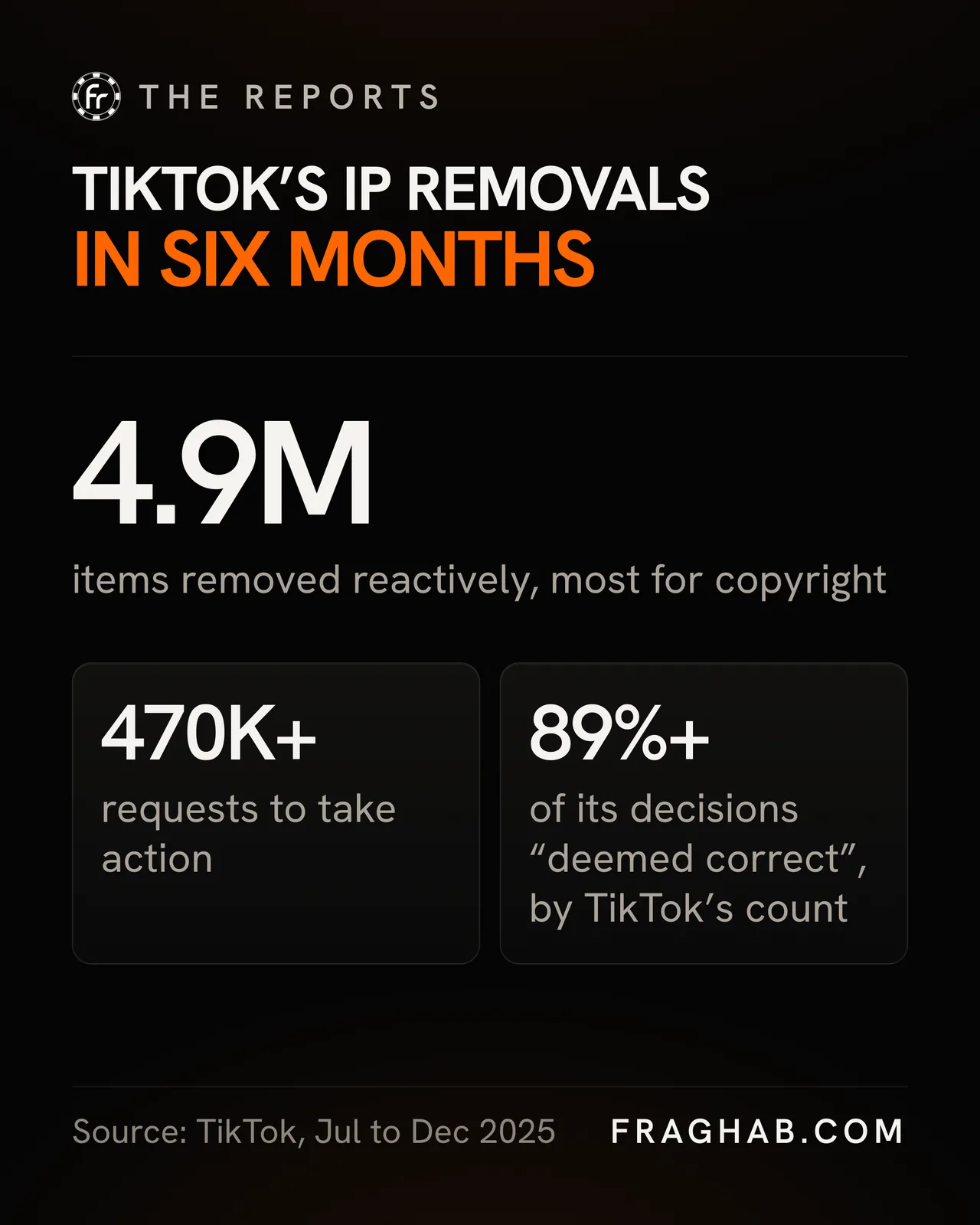
Platforms can set rules stricter than the law. TikTok’s US Shop rules ban listings claiming products are “dupes, fakes, knock-offs,” and its trademark guide names “inspired by X brand” and “smells like” as violating phrases, so much of the seller wording above couldn’t be used to sell through TikTok Shop. None of the Meta or TikTok community rules I could read mention dupes at all. They ban intellectual property violations and act on reports, and Meta’s forms are built around a registered trademark and an authorized filer. TikTok says it received more than 470,000 IP requests from July to December 2025 and removed 4.9 million items reactively, most of them for copyright.
What isn’t
In the EU, the Digital Services Act requires platforms to offer a free complaint process for at least six months after a decision, and, after a warning, to suspend for a reasonable period the processing of notices from people who frequently file manifestly unfounded ones. Elsewhere it’s thinner. Copyright comes with a counter-notice and, in America, liability for knowing misrepresentation, while a trademark report gets you a platform appeal. I couldn’t find either company saying how many reports end an account.
TikTok’s own illegal-content process asks the reporter to select the country where the content is illegal, and says it will generally restrict access there, “or, in some cases, across the EEA region or by removing the content from our platform entirely.” It also says content is “removed globally if the content is found to violate TikTok’s policies.” So a report grounded in German law can end in a removal that also hides the post from American viewers, where courts have tolerated named comparisons since 1968. Nobilis hasn’t published what it filed about Deyzel, and I couldn’t find a comment from either platform on which form was used.
Collectors and Viewers
The people at the end of the chain have the fewest rules. You can buy what you like, say what you smell and what it reminds you of, and boycott whoever you want. If you’re paid, gifted, on commission or selling something yourself, the influencer rules above apply to you too. You can’t threaten anyone. Police in Westhessen are investigating threats made against Heuser during this dispute.
The Short Version
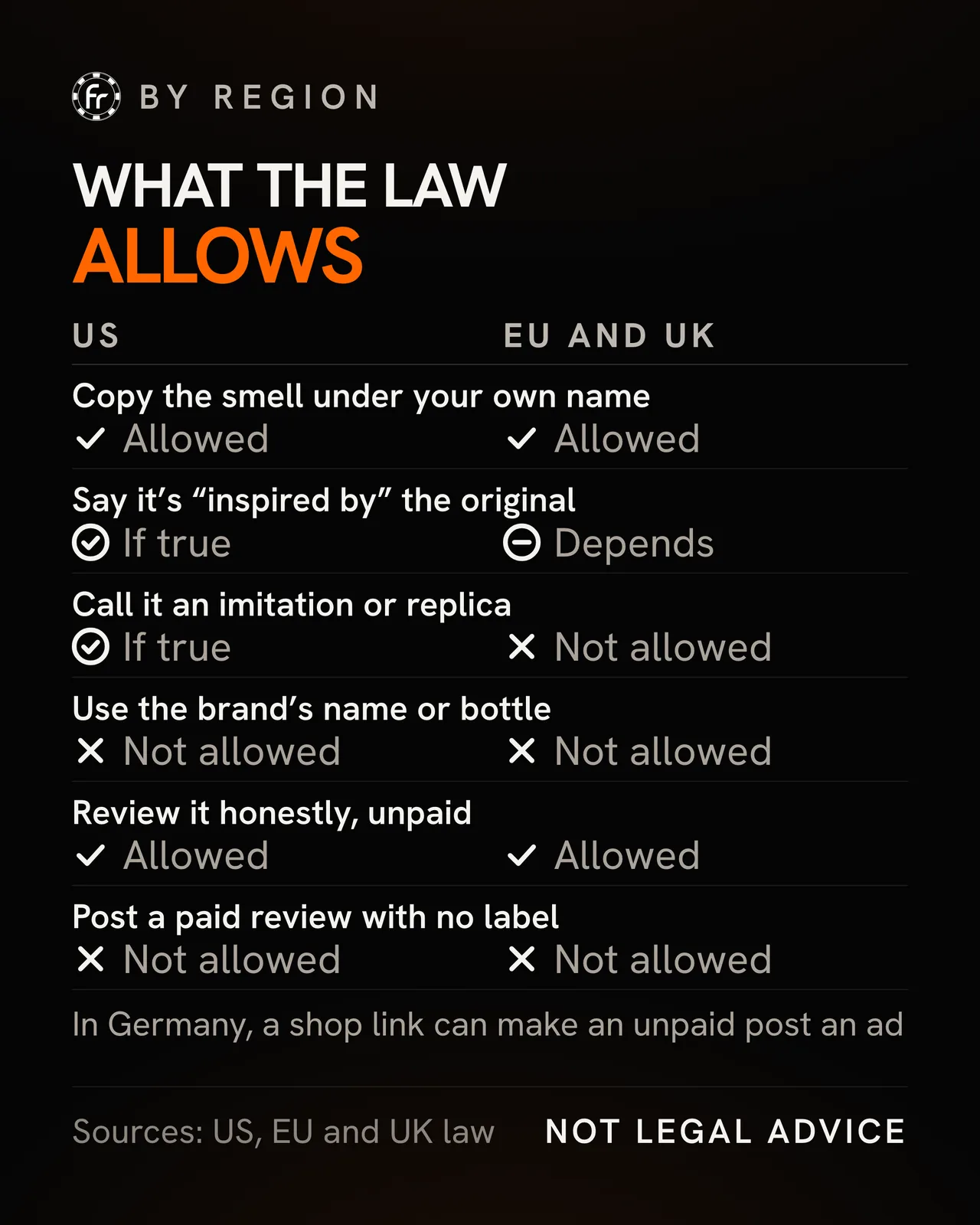
Copying a smell is generally allowed. Houses own names, bottles and packaging, not scents. Distributors can enforce the rights they hold, in court or by reporting to a platform, and whether reporting reviewers is legitimate enforcement hasn’t been ruled on. Naming the original is generally allowed in America if the comparison is true and nobody’s confused, while a clear imitation claim is where sellers lose in the EU, Britain and Germany. A German shop answers for reviews it uses as a sales tool, a British brand can answer for its affiliates, and a German decant under the brand’s name is a trademark problem. An unpaid reviewer is in the strongest position of anyone. A payment, a free bottle, a commission, a code or your own shop changes that and has to be disclosed, and in Germany a shopping link can change it even without a commission. A platform can remove content under its own rules whatever a court might have said.
For the record, I run Fraghab, and the catalogue links in this piece go to its own Library. I haven’t accepted free products from any brand and don’t intend to.
Whatever a court eventually says about “smells like,” the rule on money is already settled. If you have a stake, say so.
Sources, 80
- Premium Beauty News, Noel Deyzel’s account suspension reignites debate over fragrance dupes (27 Oct 2026) (opens in a new tab)premiumbeautynews.com
- oe24, Krieg mit Influencern: Mord-Drohung gegen Parfüm-König (31 Oct 2026) (opens in a new tab)oe24.at
- Handelsblatt, Unternehmer klagt gegen Influencer und erhält Morddrohungen (2026) (opens in a new tab)handelsblatt.com
- Udo Heuser, LinkedIn post, Ich bekomme jetzt Morddrohungen (25 Oct 2026) (opens in a new tab)linkedin.com
- Directive 2006/114/EC on misleading and comparative advertising, Article 4 (opens in a new tab)legislation.gov.uk
- Germany, UWG section 6 (opens in a new tab)gesetze-im-internet.de
- Germany, UWG section 5a (opens in a new tab)gesetze-im-internet.de
- Germany, UWG section 8 (opens in a new tab)gesetze-im-internet.de
- Germany, UWG section 8c (opens in a new tab)gesetze-im-internet.de
- Germany, UWG section 13 (opens in a new tab)gesetze-im-internet.de
- US Code, 15 USC 1125 (opens in a new tab)law.cornell.edu
- US Code, 15 USC 1117 (opens in a new tab)law.cornell.edu
- US Code, 17 USC 512 (opens in a new tab)law.cornell.edu
- US Code, 18 USC 1839 (opens in a new tab)law.cornell.edu
- Directive (EU) 2016/943 on trade secrets, Article 3 (opens in a new tab)legislation.gov.uk
- US Code of Federal Regulations, 16 CFR 255.1 (opens in a new tab)law.cornell.edu
- US Code of Federal Regulations, 16 CFR 255.5 (opens in a new tab)law.cornell.edu
- US Code of Federal Regulations, 16 CFR 465.2 (opens in a new tab)law.cornell.edu
- US Federal Trade Commission, FTC’s Endorsement Guides: What People Are Asking (opens in a new tab)ftc.gov
- US Federal Trade Commission, Tea marketer misled consumers (Mar 2020) (opens in a new tab)ftc.gov
- UK Digital Markets, Competition and Consumers Act 2024, Schedule 20 (opens in a new tab)legislation.gov.uk
- Advertising Standards Authority, Recognising ads: social media (6 Aug 2026) (opens in a new tab)asa.org.uk
- Advertising Standards Authority, ruling on THG Beauty, TFS Buying and Erim Kaur (25 Sep 2024) (opens in a new tab)asa.org.uk
- Osborne Clarke, ASA crackdown on influencer Grace Beverley (2024) (opens in a new tab)marketinglaw.osborneclarke.com
- US FDA, Modernization of Cosmetics Regulation Act of 2022 (opens in a new tab)fda.gov
- European Commission, Legislation on cosmetics (opens in a new tab)single-market-economy.ec.europa.eu
- Regulation (EU) 2022/2065, Digital Services Act (opens in a new tab)eur-lex.europa.eu
- Court of Justice of the EU, L’Oréal v Bellure, C-487/07 (18 Jun 2009) (opens in a new tab)eur-lex.europa.eu
- Court of Appeal of England and Wales, L’Oréal v Bellure, [2010] EWCA Civ 535 (opens in a new tab)caselaw.nationalarchives.gov.uk
- Flick Gocke Schaumburg, Verbot des Vertriebs von Luxusartikeln auf Amazon zulässig (8 Dec 2017) (opens in a new tab)fgs.de
- WIPO Magazine, Copyright in the courts: perfume as artistic expression (opens in a new tab)wipo.int
- Le Monde du Droit, L’anosmie des hauts magistrats (15 Jan 2014) (opens in a new tab)lemondedudroit.fr
- Gerechtshof ’s-Hertogenbosch, Lancôme v Kecofa (8 Jun 2004) (opens in a new tab)kohenavocats.com
- US Court of Appeals, Ninth Circuit, Smith v. Chanel, 402 F.2d 562 (1968) (opens in a new tab)law.resource.org
- US Court of Appeals, Ninth Circuit, Saxony Products v. Guerlain, 513 F.2d 716 (1975) (opens in a new tab)law.resource.org
- US Court of Appeals, Second Circuit, Charles of the Ritz v. Quality King, 832 F.2d 1317 (1987) (opens in a new tab)law.resource.org
- US Court of Appeals, Ninth Circuit, Bosley Medical v. Kremer, 403 F.3d 672 (2005) (opens in a new tab)law.resource.org
- US Supreme Court, Prestonettes v. Coty, 264 U.S. 359 (1924) (opens in a new tab)law.cornell.edu
- Rebecca Tushnet’s 43(B)log, It stinks to high heaven (on Coty v. Excell Brands, 22 Sep 2017) (opens in a new tab)tushnet.com
- The Fashion Law, How Sol de Janeiro is making the case for its fragrance trade dress (2026) (opens in a new tab)thefashionlaw.com
- The Fashion Law, Federal court rules in favor of e.l.f. in dupe mascara case (opens in a new tab)thefashionlaw.com
- OLG Köln, 6 U 63/05 (28 Nov 2008) (opens in a new tab)nrwe.justiz.nrw.de
- Legal Tribune Online, BGH: Handel mit Parfümimitaten nicht gleich unlautere Werbung (6 May 2011) (opens in a new tab)lto.de
- Federal Court of Justice of Germany, I ZR 193/18 (20 Feb 2020), citing decisions (opens in a new tab)dejure.org
- Federal Court of Justice of Germany, press release 170/2021 on influencer rulings (9 Sep 2021) (opens in a new tab)bundesgerichtshof.de
- Noerr, BGH-Grundsatzurteile zum Influencer-Marketing (2021) (opens in a new tab)noerr.com
- Kanzlei Plutte, Rechtsübersicht: Duftzwillinge (17 Aug 2025) (opens in a new tab)ra-plutte.de
- Kanzlei Plutte, LG Berlin: Keine Haftung von Google für AI Overviews (2026) (opens in a new tab)ra-plutte.de
- LHR Rechtsanwälte, Die Werbung für Duftzwillinge ist rechtswidrig, auch in Kundenbewertungen (24 Oct 2024) (opens in a new tab)lhr-law.de
- Kammergericht Berlin, 5 U 135/21 (10 Jul 2024), reproduced by Kanzlei Kotz (opens in a new tab)ra-kotz.de
- Kluwer Trademark Blog, Can reporting on dupes of famous perfumes amount to trademark infringement? (2023) (opens in a new tab)legalblogs.wolterskluwer.com
- OLG Nürnberg, 3 U 136/25 (8 Jul 2025) (opens in a new tab)gesetze-bayern.de
- Legal Tribune Online, Markenrechtsstreit über Parfüm zwischen Coty und Aldi (2023) (opens in a new tab)lto.de
- JUVE, Coty und Nobilis setzen Duftzwillingen mit Lubberger enge Grenzen (opens in a new tab)juve.de
- Nobilis Group, press release on ÉCLAT (May 2025) (opens in a new tab)nobilis-group.com
- FÖHLISCH Rechtsanwälte, Abmahnung für Nobilis Group wegen Duftzwillingen (2024) (opens in a new tab)foehlisch.com
- RED SPA, Die NOBILIS GROUP erwirkt einstweilige Verfügung gegen LORIS (Feb 2024) (opens in a new tab)redspa.de
- Meta, Community Standards: Intellectual Property (opens in a new tab)transparency.meta.com
- Meta, Protecting intellectual property rights (opens in a new tab)transparency.meta.com
- Meta, Facebook trademark report form (opens in a new tab)facebook.com
- TikTok, Community Guidelines: Integrity and Authenticity (25 Aug 2026) (opens in a new tab)tiktok.com
- TikTok, Reporting Illegal Content (opens in a new tab)tiktok.com
- TikTok, Intellectual Property Removal Requests, July to December 2025 (24 Jun 2026) (opens in a new tab)tiktok.com
- TikTok Shop Seller University, Product Listing Policy (1 Sep 2026) (opens in a new tab)seller-us.tiktok.com
- TikTok Shop Seller University, How to Avoid Counterfeits, Knockoffs, and Other Trademark Infringement Violations (24 Jun 2026) (opens in a new tab)seller-us.tiktok.com
- Dossier, Woody Sandalwood product page (read 1 Nov 2026) (opens in a new tab)dossier.co
- ALT. Fragrances, Pure Aura product page (read 1 Nov 2026) (opens in a new tab)altfragrances.com
- Oakcha, Point of No Return product page (read 1 Nov 2026) (opens in a new tab)oakcha.com
- Alexandria Fragrances, Judgment Call 42 product page (read 1 Nov 2026) (opens in a new tab)alexandriafragrances.com
- ÉCLAT, ÉCLAT 920 product page (read 1 Nov 2026) (opens in a new tab)eclat.de
- Afnan, Stardust product page (read 1 Nov 2026) (opens in a new tab)us.afnan.com
- French Avenue, Prune Hypnos product page (read 1 Nov 2026) (opens in a new tab)frenchavenue.com
- Armaf, The Lion’s Club Monarque product page (read 1 Nov 2026) (opens in a new tab)armaf.com
- Amazon, Dossier Floral Lavender listing (read 1 Nov 2026) (opens in a new tab)amazon.com
- Eau d’ Erica, YouTube, Armani Short (19 Oct 2026) (opens in a new tab)youtube.com
- Elijah Yeroushalmi, YouTube, BOSS Short (28 Aug 2026) (opens in a new tab)youtube.com
- Kai Porten, Linktree (read 1 Nov 2026) (opens in a new tab)linktr.ee
- Patron, YouTube, €365 Amouage Decision vs. €35 Rayhaan Vantage (10 Oct 2026) (opens in a new tab)youtube.com
- Patron, TikTok, LFDY Live Fast Trust No One review (31 Oct 2026) (opens in a new tab)tiktok.com
- Cal Cologne, YouTube, Does the fragrance Kibria Supermo smell like El Padrino? (9 Oct 2026) (opens in a new tab)youtube.com
Filed under
Published under Fraghab’s editorial standards. alex keeps the copyright, and wrote every word of this — an editor here cannot change them. Something wrong? Tell us.